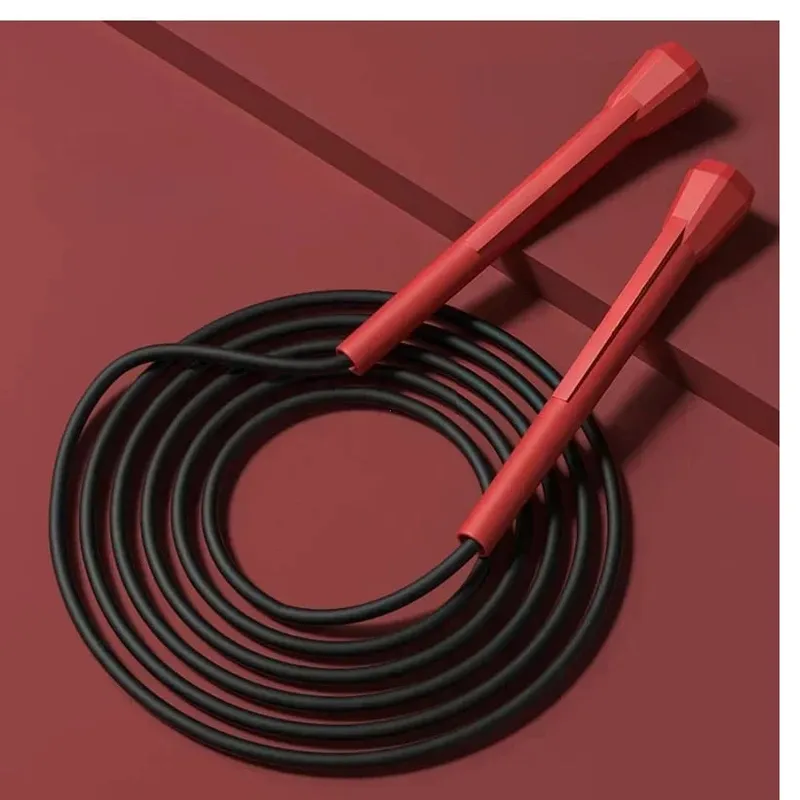
# The Jump Rope That Actually Gets Used (Yes, Really)
I've sold a lot of jump ropes over the years. Hundreds of them. And here's the thing I've learned: most people buy a rope, use it twice, and then it lives in the bottom of a gym bag until they eventually throw it out during spring cleaning. It's not because jumping rope is hard, although it kind of is when you're starting. It's usually because the rope itself was junk. Tangled the second you took it out of the package, handles that slipped out of your hands when you started sweating, a cord so stiff you could practically use it as a garden hose. That experience is common, and it's exactly why so many people give up on skipping before they ever get the rhythm down.
So when we brought in the Professional Jumping Rope with SKU P3256809204469099, I admit I was skeptical at first. Another rope, another dusty shelf. But this one has honestly surprised me. I've had one out back behind the shop for testing, and it's held up better than some ropes I've paid three times as much for. Let me tell you what you're actually getting.
## Material and Build Quality
The cord is PVC, 5mm thick, and that's a good thing whether you realize it or not. A lot of cheap ropes use a thin plastic cord or coated wire, and both of those tend to kink and stay kinked. PVC at this thickness is flexible without being floppy. It also has a bit of weight to it, which matters more than people think. A slightly heavier rope gives you feedback when it passes under your feet, and that feedback is what helps you build a rhythm instead of just guessing when to jump. The handles are solid, and the connection point where the cord meets the handle rotates properly, which is the number one failure point I see on cheap ropes. I've watched this cord spin through hundreds of rotations without twisting up or catching, and that's the main reason I'm comfortable recommending it.
## The Exact Specs
Let me give you the numbers, because vague product descriptions drive me nuts. The rope is 2.8 meters long with a 5mm diameter cord, and it comes in standard sizes with three color options so you can pick whichever one you won't lose in your car. Just know that because everything is measured manually, you can expect a small variance, roughly 1 to 2 millimeters either way, which is normal and won't affect anything. Color tones can also look a little different from the listing photos depending on your screen, and I'd rather tell you that upfront than have you email me confused. At $12.09, you're getting a real piece of equipment without paying boutique fitness money. That price point is honestly the part that surprised me most.
## What You'll Actually Use It For
Here's where this rope earns its keep. First scenario: you're at the gym, the treadmills are all taken, and you need cardio that won't eat 45 minutes of your life. Five minutes of skipping and you're done, heart pounding, no machine required. Second: you're at home, it's raining, and you don't want to drive anywhere. You pull this out, find a spot in the garage or even in the hallway if you're careful, and put in ten minutes while dinner's in the oven. Third, and this is the one people overlook, it's a fantastic warmup tool before lifting. A couple of minutes of easy skipping loosens up your ankles, calves, and shoulders far better than a few halfhearted arm circles ever will. And yes, kids use it too. My neighbor's ten year old stole mine for two weeks, which I'm still slightly annoyed about.
## How to Use and Care For It
First thing: measure the rope before you start. Stand on the middle of the cord and pull the handles up. They should reach roughly to your armpits. If they're going past your shoulders, the rope is too long and you'll trip constantly. Most people don't realize this and assume they're just bad at jumping, when really the rope is the problem. Once you've got the length sorted, jump low, just an inch or two off the ground, and spin the rope from your wrists, not your whole arms. Your arms will thank you and you'll last a lot longer. For maintenance, wipe the cord down with a damp cloth if it gets dirty, and don't store it coiled up tight in a ball. Hang it or lay it flat. PVC can take a beating, but it doesn't like sitting in a cramped shape for months, and that's how you end up with permanent kinks.
## The Honest Pros and Cons
The pros: it's durable, the rotation is smooth, the PVC cord has just enough weight to give you feedback, and the price is genuinely hard to argue with. It works for an adult doing serious conditioning and for a kid just messing around in the driveway, which is a wider range than most ropes manage. The cons? Honestly, the 2.8 meter length will be too long for shorter users and definitely for most kids out of the box, so you'll likely need to trim it. Once you cut it, that's it, no going back, so measure twice. There's no ball bearing in the handle, so if you're a competitive speed jumper chasing double unders at a serious level, you might want a pricier option. And the color difference thing I mentioned earlier is real. Minor stuff, but you should know it before you buy.
## Why This Design Works, and Who It's For
From a design standpoint, the logic here is simple and sound. A 5mm PVC cord hits a sweet spot: thick enough to hold its shape, light enough to spin fast, heavy enough that you can feel where it is without looking. That thickness is also part of why the rope tolerates abuse, since thin cords fray and snap, while this one has material to spare. The lack of ball bearings keeps the cost down and the maintenance near zero; a simple rotating connection will outlast a cheap bearing any day. So who does it suit best? Beginners who need a rope that won't fight them. Casual fitness folks who want cardio without a machine. Parents buying something that survives being thrown in a backpack. And honestly, anyone who doesn't want to spend fifty bucks to find out if they even like skipping. If you're a competitive speed jumper, keep looking. For everyone else, this is the one I'd hand you.